

CUERPA MOSTRA
Generative artificial intelligence was built for flawless efficiency, selling us a modern fantasy: the tools to create a body without consequence, without effort, without dissidence, a body that is always legible, always clean, always already erased of its own monstrousness. These tools seek a smooth, optimized, and painless world where creation is supposedly freed from the wear and tear of human anatomy. But what happens when we refuse this bland and sterile digital detachment? Cuerpa Mostra was born from the direct collision between the algorithmic promise of an unfeeling body and the agonizing, tangible reality of chronic physical pain. Like a modern-day Frankenstein stitched together not just from flesh, but from data, prosthetics and plastic trash, the project reflects on what kind of monsters emerge when we drag the digital gaze back into the human wounded body.

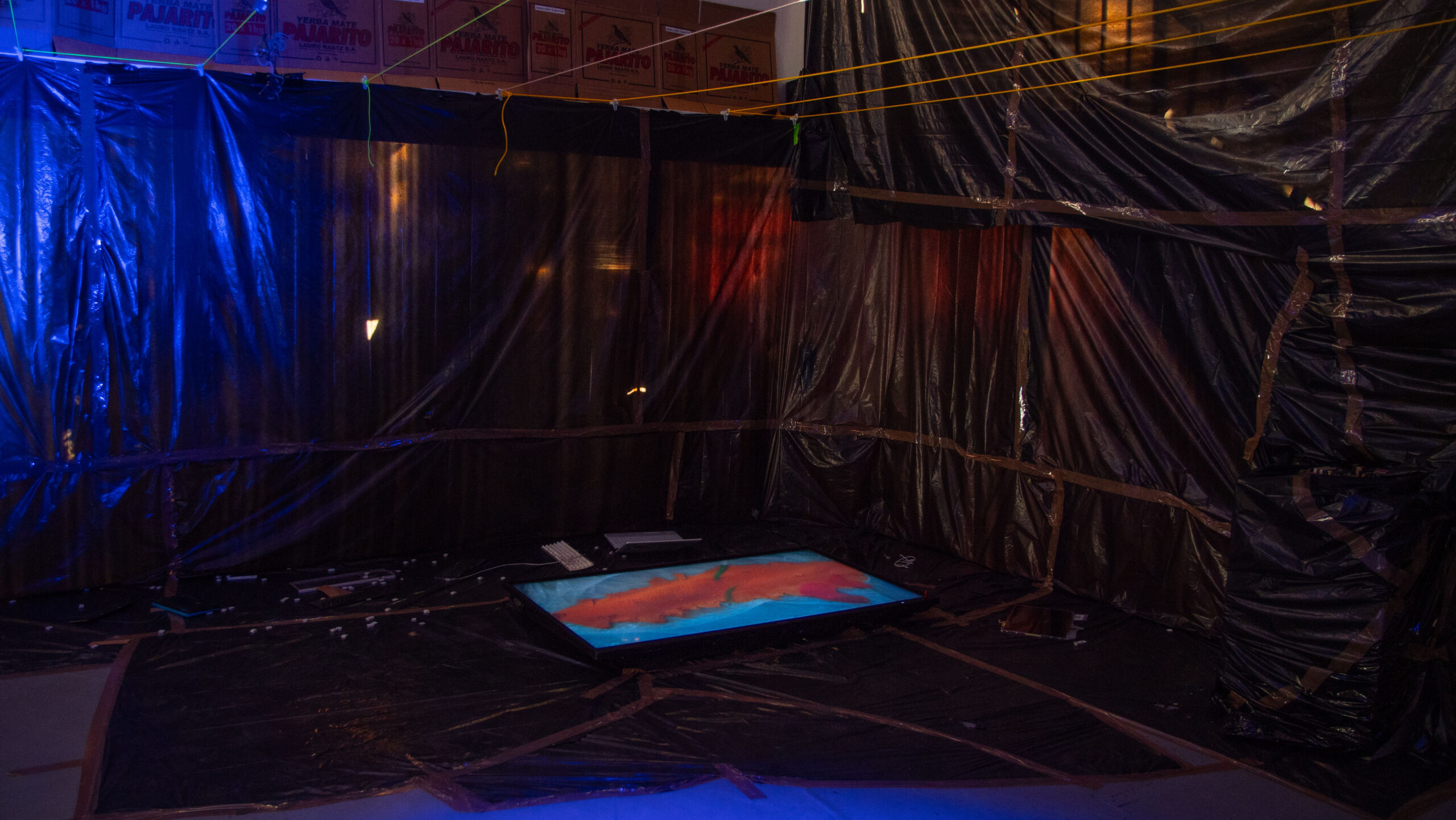
The work was materialized during a grueling two-week residency aboard the MS Dauerwelle. The score for those days was to actively work on the space, progressively re-skinning and transforming the ship’s interior into a new atmosphere, a living film set, generative laboratory and exhibition space. Simultaneously, the objective was to inhabit this environment while creating an experimental AI film. This situated experiment comprised the physical construction of a “somatheque”, an immersive, deeply precarious habitat made of black garbage bags, plastic, fake smelly skins, tape, and clumsy electronics plus servo motors. This space was designed to be a tactile envelope for synthetic bodies to be born. Cheap, precarious, odorous.
The material logic was deliberate. While the algorithmic image is built on laundered datasets, on the quiet violence of cropping, labeling, and erasing what doesn’t conform, this project insists on accumulation, on the stain, on what refuses to be thrown away. Yet, the precarity of this environment quickly became a paradox of fragility and danger. The DIY construction was highly flammable, toxic-smelling, and structurally unstable. It became a literal institutional threat. The monster then, was no longer just a metaphor. My presence and the precarious, hazardous nature of the materials became a direct friction against the normative and institutional rules of the space.
…Link to a 3D model of the space (https://sketchfab.com/3d-models/cuerpa-mostra-3d-60fcd2a8f4fc4bbfac2530c34fc8f699)
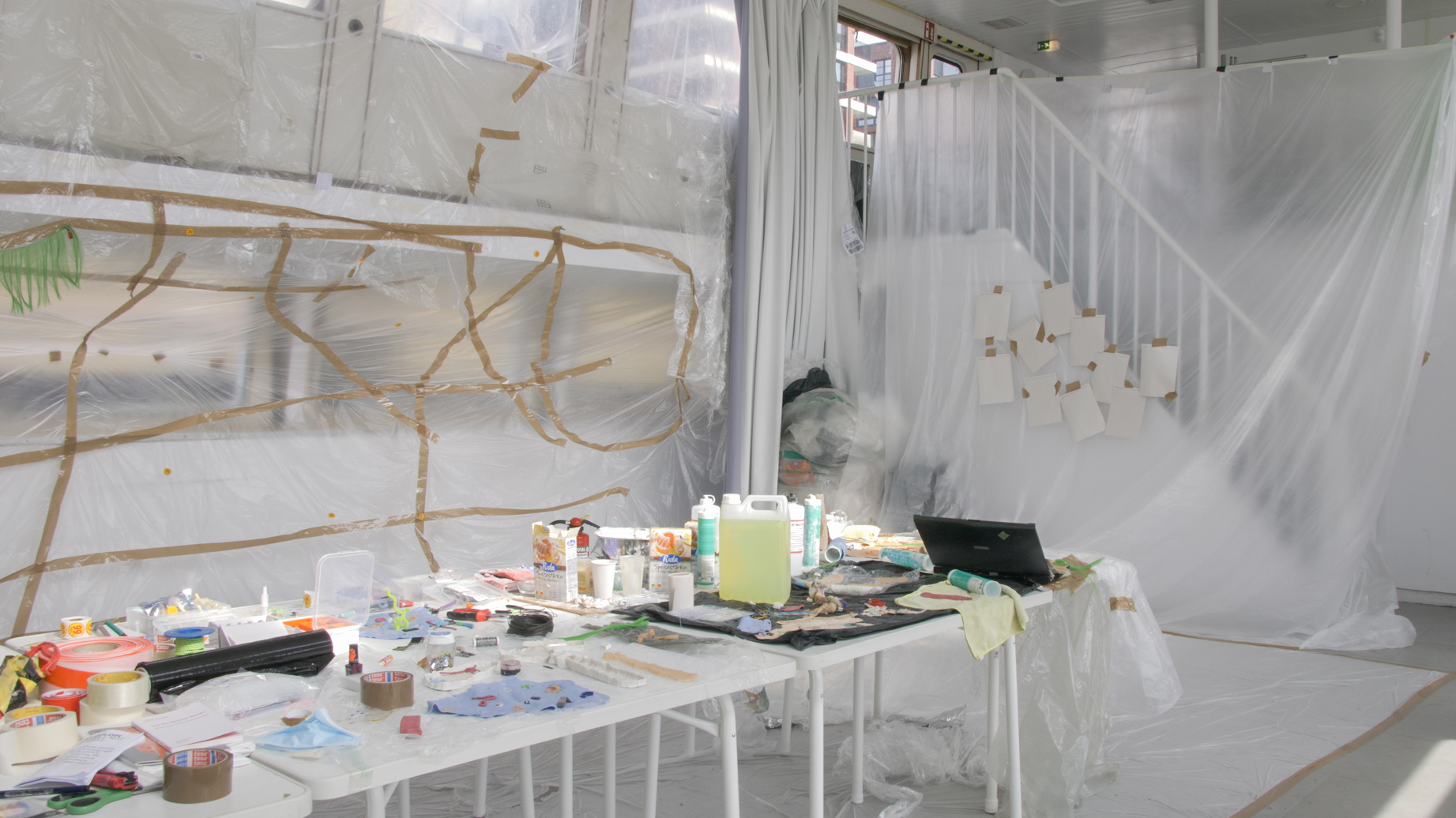
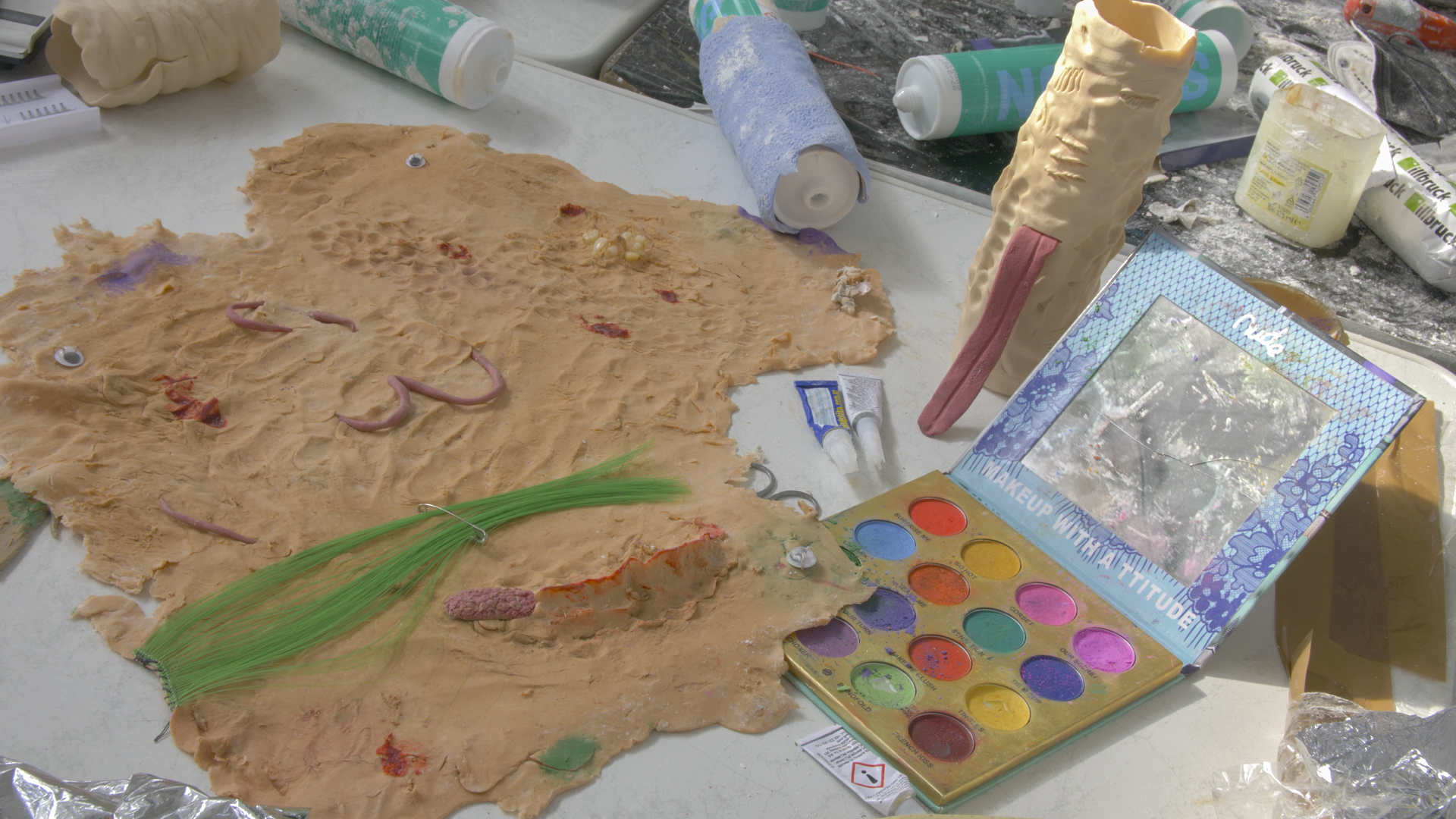

Because the process and the materials deployed throughout the room became the very dataset used to train the AI, the boundaries between the physical installation and the digital archive collapsed. The space became part of the film, and the film was all over the space. Physical abjection was digitized. The debris, the small electronics, the crafted objects and the plastic textures surrounding the boat were documented and fed into generative models to train a custom LoRA. However, instead of using these advanced technological tools for image generation to achieve the hyper-realistic perfection and efficiency they were designed for, I weaponized them to do the exact opposite. The goal was to show the ingredients, to pervert the image, to break the illusion of algorithmic magic, to show the seam, the glitch, the scar, and the trick behind the synthetic image.
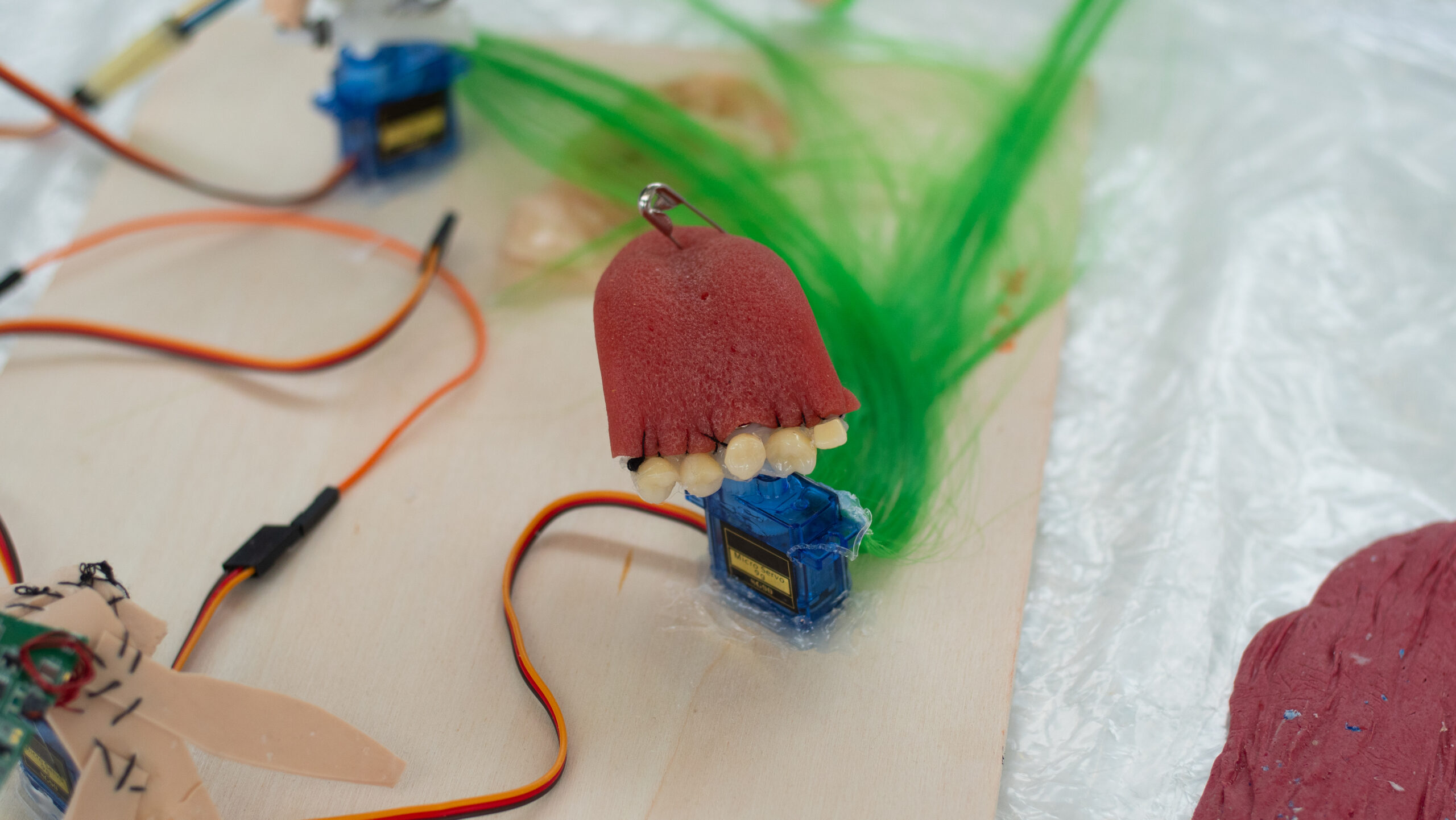
Into this habitat, handcrafted prosthetic bodies were assembled by using silicone membranes molded from cornstarch and makeup, hair, toy eyes and toy tongues, servo motors with clumsy, graceless movement. These constructions were then recorded, fed as data into open-source generative models (Stable Diffusion 1.5 and AnimateDiff) and run through a custom-trained LoRA. I used both text to video and video to video workflows in ComfyUI. I deliberately chose to use (kinda) outdated open source generative tools because it allowed me to fine-tune a model using my own raw, curated information. Unlike current commercial platforms (like OpenAI, Meta, xAI, Google, Runway, Adobe) which function as opaque black boxes engineered to sanitize the errors and erase their own seams, these older, more unstable, yet highly customizable architectures still let you see the stitching. The flicker between frames becomes a scar. The deformation becomes a declaration. The defect becomes the form.
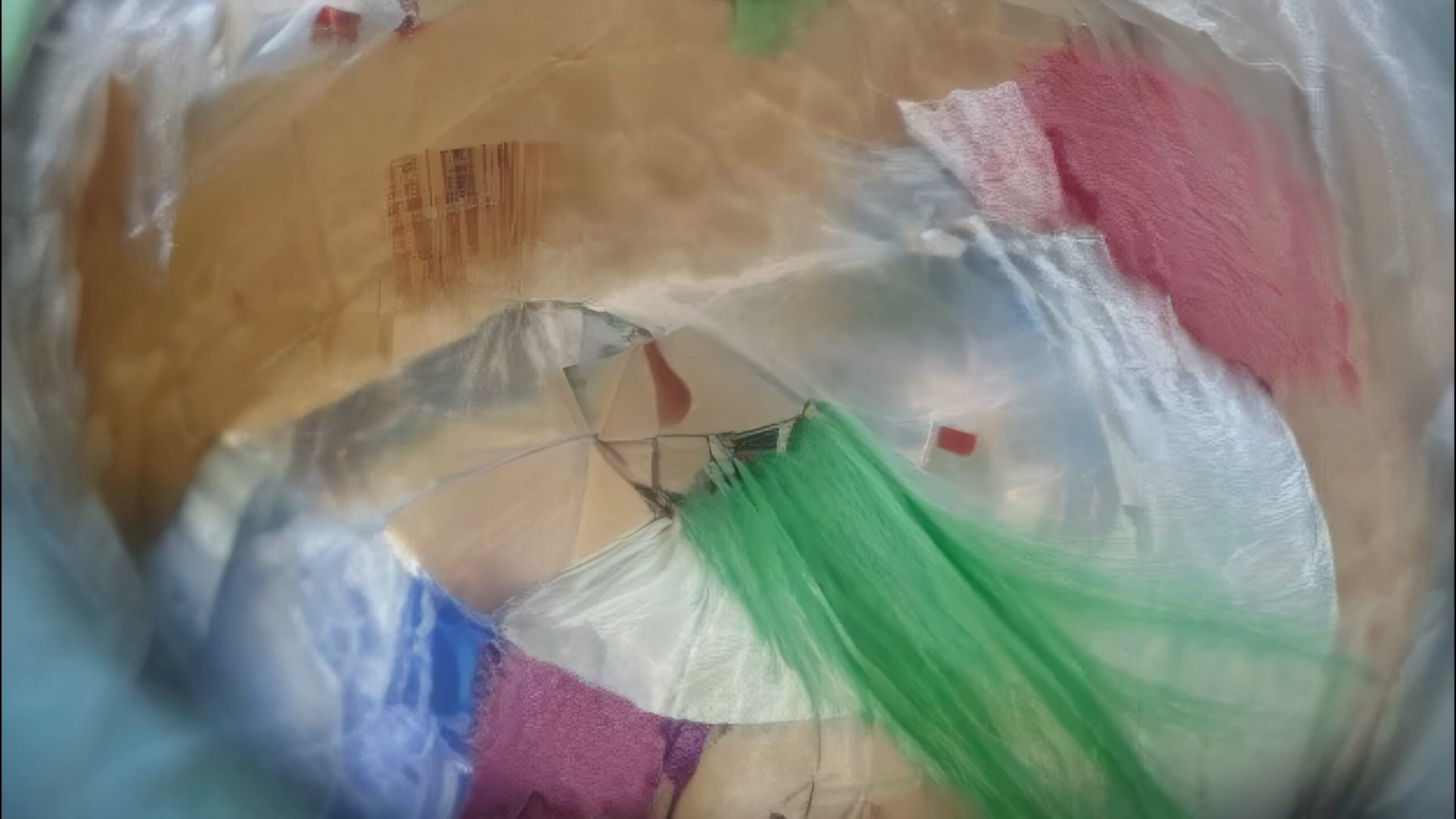
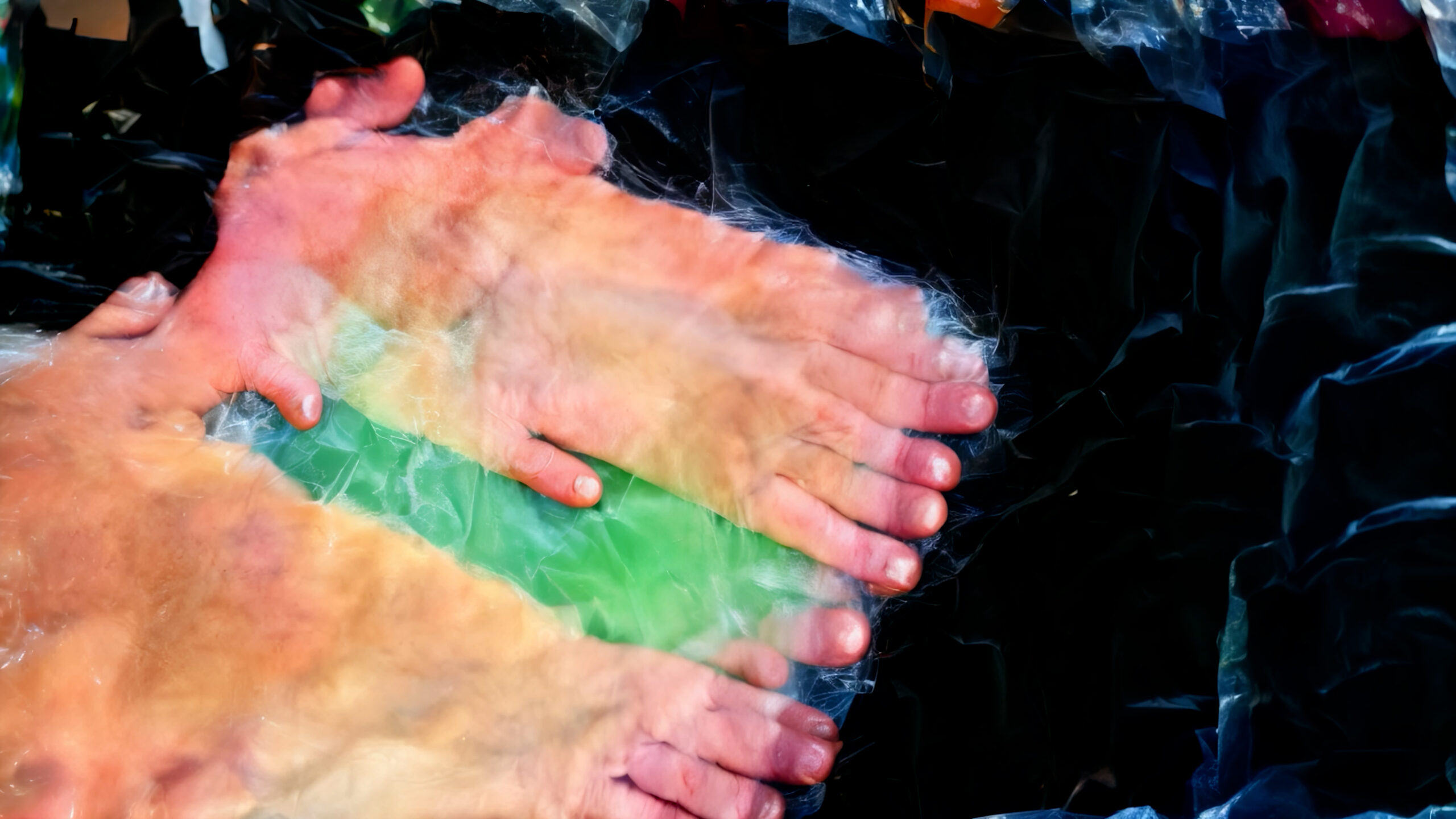
The resulting short film operates as a generative, longitudinal vomit, a “video-surface” where montage is not driven by traditional narrative cuts, but by the violent, direct transformation of textures, colors, and shapes. In this tactile, almost haptic film, the flicker of the AI acts as a sutured wound, interpolating between frames with a logic that constantly breaks and bleeds. One frame glues to the next to generate an uninterrupted, aberrant topography. An imploded body where hair turns into plastic, plastic melts into skin, and skin stiffens into cardboard.

Sound design had to act as a somatic anchor. While the visual realm is hijacked and mutated by the machine, the soundscape remains strictly analog, devoid of any generative computation or musical score that might soften the impact. Instead, it is an experimental, broken recording of body noises, foley and sounds of the space, like the ship groaning, plastic and cardboard tearing apart, and the crude, unfiltered sounds of my own weeping, exhausted whispers, and erratic breathing. This sonic layer does not merely accompany the image: it attacks it. It establishes a violent friction with the synthetic surface, restoring the physical weight, exhaustion, and inescapable pain that algorithmic rendering always tries to erase.


Ultimately, this project was an attempt to forge impossible bodies. Inert bodies made out of plastic, skin-surface-bodies made out of silicone, small bodies moved by small motors, synthetic bodies, synthographic bodies. It was an exercise in crafting prosthetics, protuberances, and monstrosities that, precisely because of their artificiality, would not hurt.
But Cuerpa Mostra didn’t resolve the paradox of pairing disembodied generative tools with arduous, embodied physical labor. It merely lived through the agony of that clash. The illusion of creating an anesthetized environment where a body could finally “stop hurting” failed in the face of the inescapable gravity of my own flesh, and a reality violently enforced when a severe spinal injury midway through the residency left me immobilized, editing the AI’s fluid motions from a bed of opioids and painkillers.
The monster doesn’t arrive whole. It arrives stitched, exhausted, and on the verge of its own disappearance. Through this project, and by inhabiting the depths of this material wound, I understood that no contemporary image politics achieves its true radicalism if it averts its gaze from what a body can do, and the scar is the only proof that the body was ever there.
The full thesis text is available upon request. It serves as the theoretical map of the readings, filmography, and references that fed the project’s core ideas.