Birds aren’t real, but neither are you

“Birds aren’t real, but neither are you” is a live performance-video work exploring how the self emerges, refracts, and reforms when framed within the gaze of an other.
In July 2025, I began visiting the Werderinsel in Bremen every day. Wearing a mask that resembled my own face, I would feed the crows peanuts to bribe my way into their good graces. It was a persistent solicitation, as penitent as I could manage. Under the mask, I became an abstraction – an image. I gave up myself and bid the crows to fill in my image’s shadow with whatever they see. And I promised to do the same for them. And give them peanuts. It took weeks before they dared to trust me, though they quickly took note of my face. Four months later, they knew my face well – or, rather, my mask-face.
On November 21st 2025, I gave the mask away to a Visitor who had never met the crows before. So long as he too remained on his best behavior, the crows would know his face because they knew my face. He would inherit the relationship I had built with the crows, but perhaps something new would emerge when his and the crows’ gazes meet?
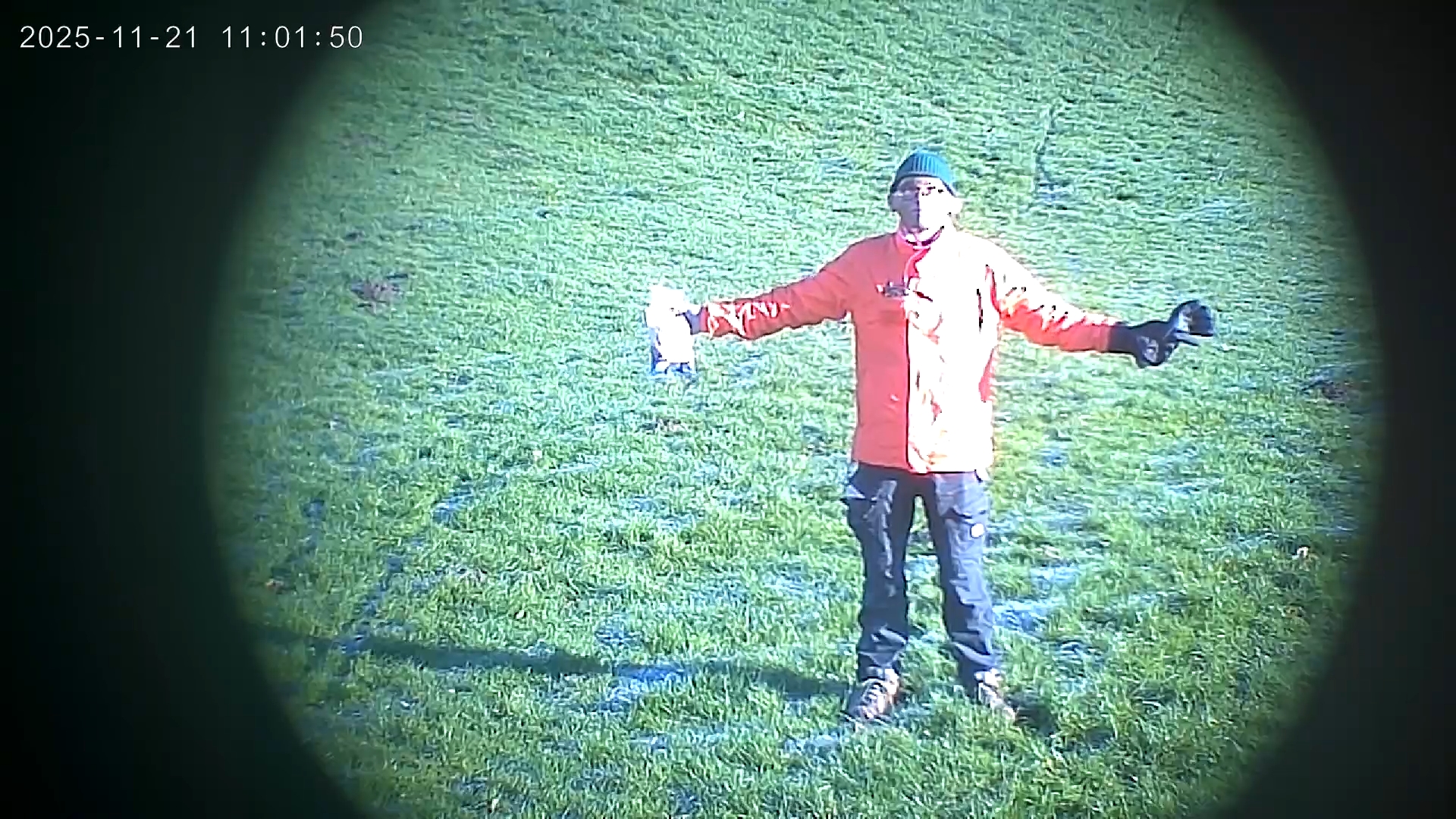
I, via an earpiece, choreographed him live as he ventured to the spot where I usually fed the crows. The Visitor wore a body camera, and a CCTV camera was mounted nearby surveilling the Visitor’s actions. Across the Werdersee lake 150 meters away, an audience for the work gathered and attempted to observe the Visitor’s encounter from a viewing area along the deich. Two artificial rocks with screens embedded in them were be placed in the viewing area and streamed the live footage from the bodycam of the Visitor and the CCTV camera. Monoculars were also available at the viewing area to provide, along with the livestreams, several imperfect forms of observation to project onto the Visitor. Simultaneously, my choreographic directions to the Visitor were heard on speakers in the viewing area as well. In aggregate, these aural and visual human observation technologies offered the audience a patchwork account of the Visitor’s choreography, with each observation medium constructing a different narrative of events across the water.

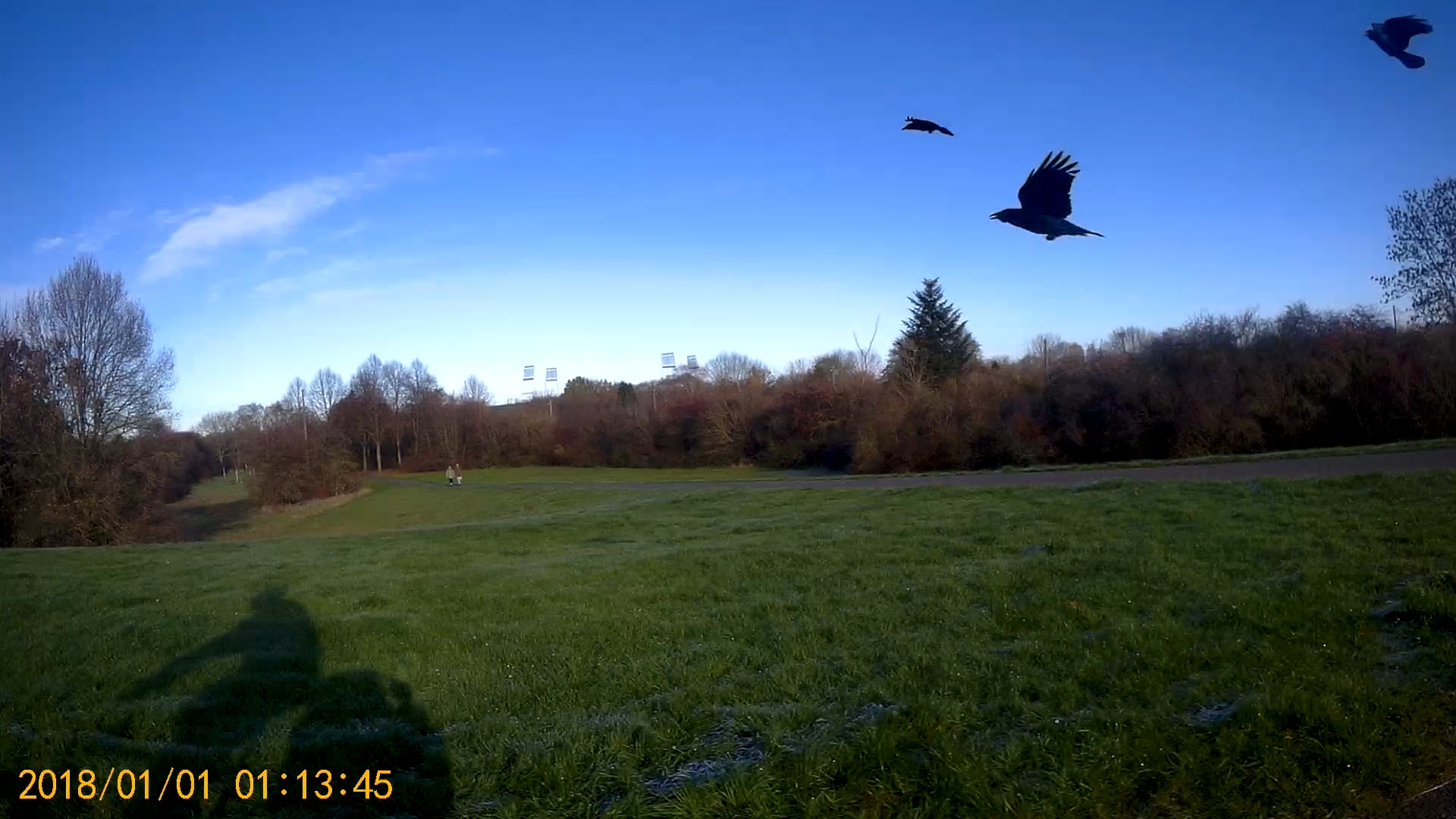
After all, we are subject every day to many other surveilling gazes and watchful eyes, and for each gaze we circumscribe ourselves into, visibility means something different. To be watched by a security camera is different from being watched by a human, or a crow. To watch is to assert power and to be watched is to be subjected to and influenced by power. To engage with a gaze, one must be attentive to what is visible and what evades capture. Good behavior with the crows requires attentiveness to their comfort levels – subtle indicators of what they see and what they do not, what they act on now, and what they have noted but will act upon when one is a safe distance away. And yet, while the CCTV watches the Visitor, the Visitor cannot watch the CCTV camera in return. Only with the crows can a conversation happen – a mutual becoming through reciprocal address in what Donna Haraway calls a “contact zone”. In this contact zone, perhaps both the crows and the Visitor can evade being flattened by the techno-human gazes upon them. In this contact zone, perhaps he can meet the crows outside of human space – in an other space where hierarchies are not so concretely defined, taxonomized and categorized according to anthropocentric positivist notions of value. In this contact zone, both crow and human are blank slates, capable of becoming with each other. Their mutual gazes instead of limiting or coercing the other can perhaps build up each other.
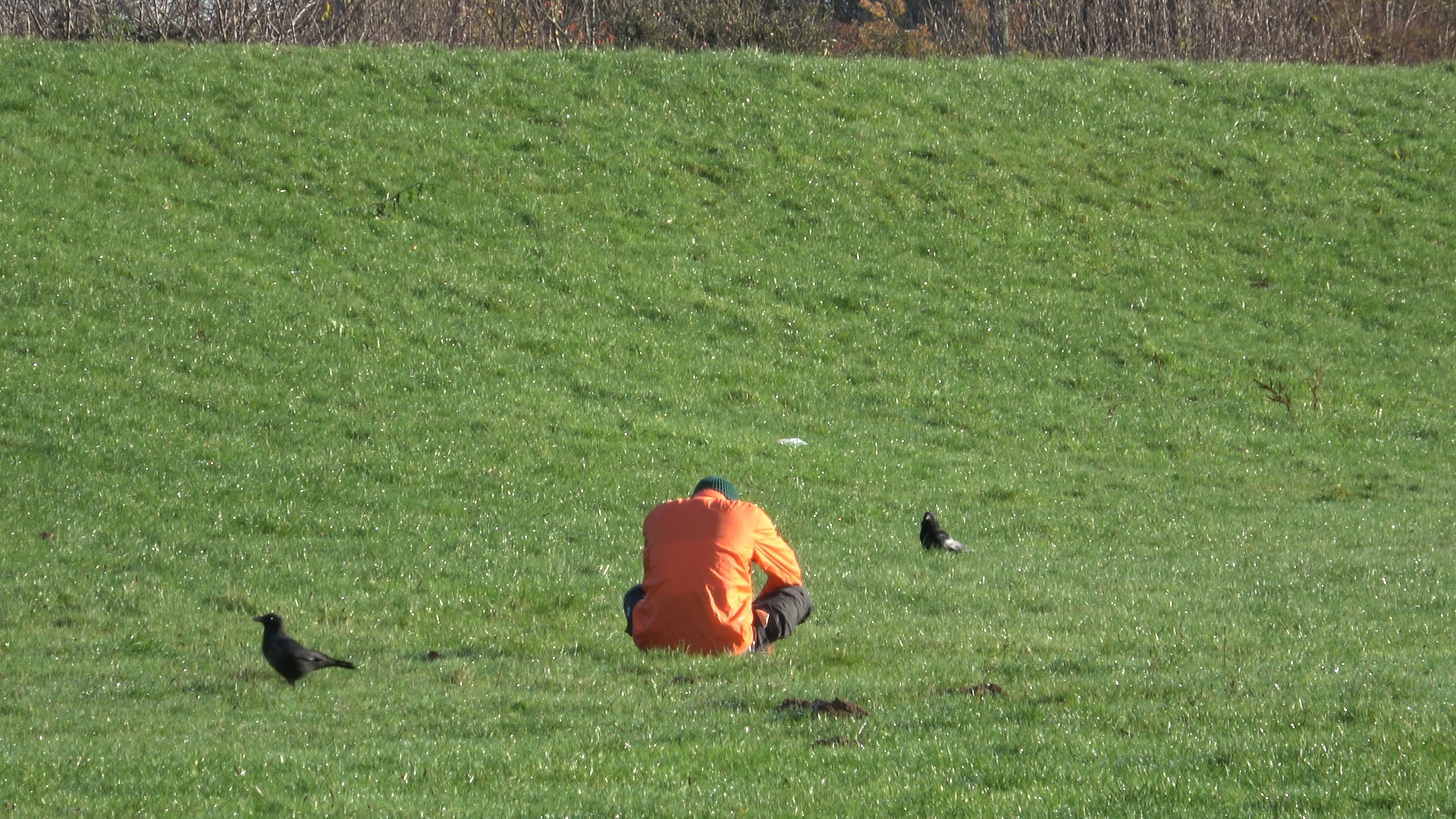
On November 21st at 10:30 AM on the Werderinsel, on one of the coldest days of the year, The Visitor in my performance was offered a chance to experience this zone, engaging with the complexity of each crow’s whims. The crows recognized him, as they recognized me, though they could sense something was different. Perhaps it was the cold, perhaps it was the Visitor’s demeanor, but he had to work diligently to court the crows. The spectators, watching from afar through imperfect technological instruments of observation, were forced to reckon with the limitations of their human attempts to observe, understand and define what transpired between the Visitor and the crows. Not only that, but they were forced to confront their own presence as foreign bodies in the ecosystem of the Werderinsel. In the process, this work offered both Visitor and spectators space to dwell with the agency of the crows and their ability to challenge existing power relations of spectatorship and visibility in our lives if only we dare to inscribe ourselves into their gaze.


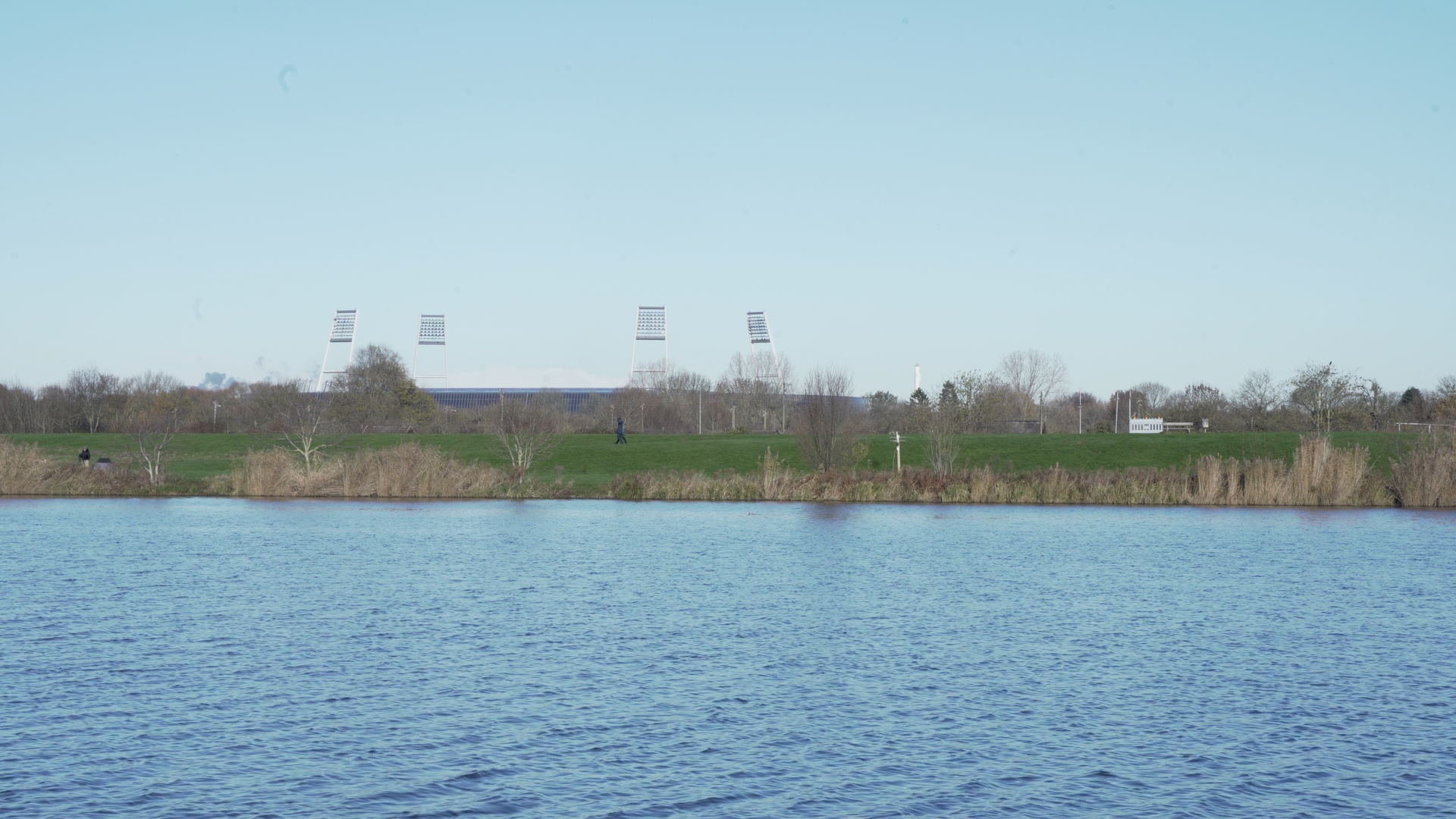

Footage by Alethia Pinzon-Rodriguez
Performed by Clemens Hornemann