

Before the storm – Silence as an act of resistance
“Before the storm / Silence as an act of resistance” is a master thesis emerged from the need to understand the political potential of collective silence that occurred several times during 2024-2025 in Serbia, the country of my origin, and its function as a form of resistance. This collective silence appeared as part of the recent student-led protest movement and symbolically represents the minutes of silence for every victim of the collapse of the second-largest train station in the country, which had been renovated under suspicious conditions.
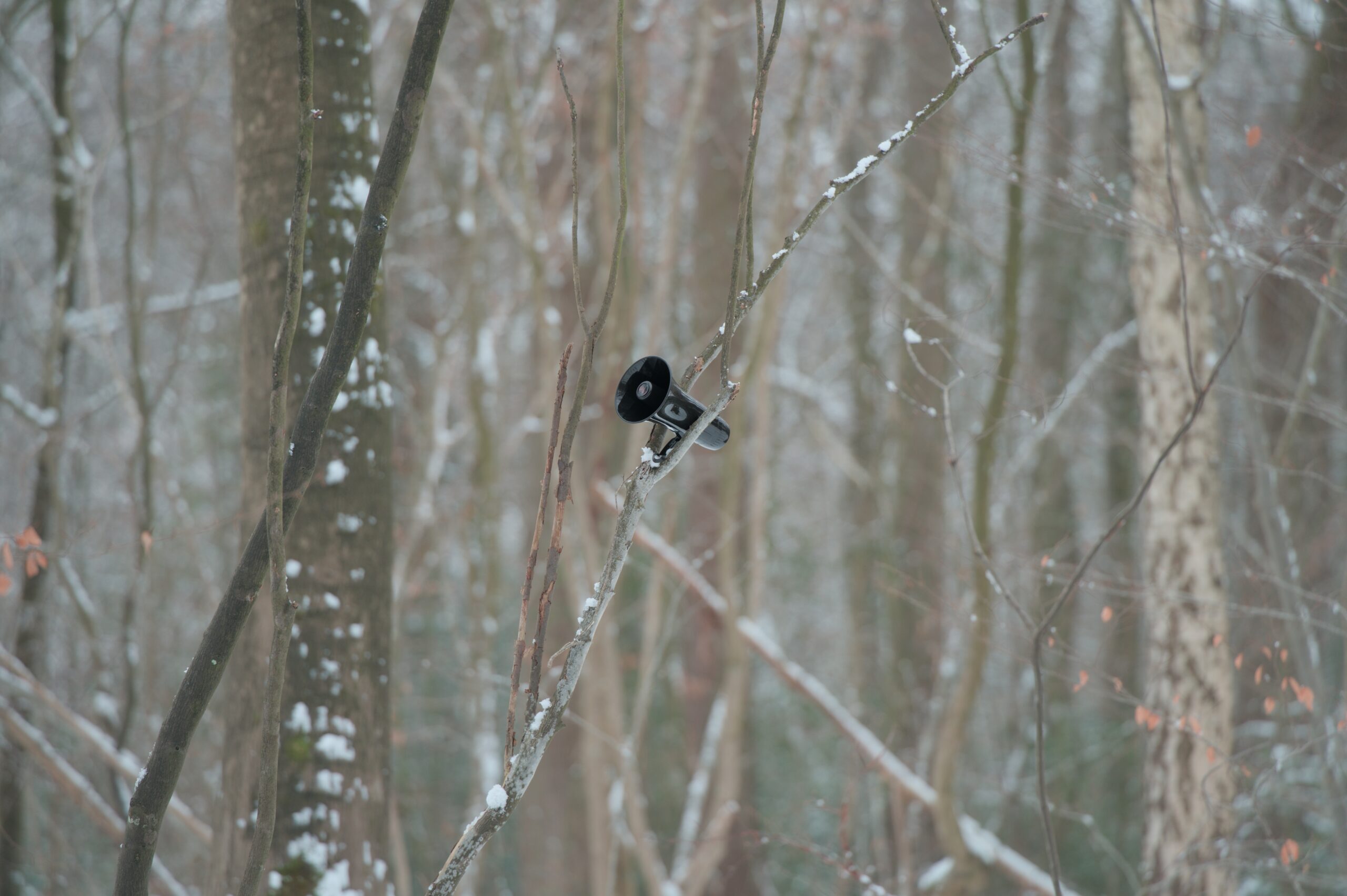
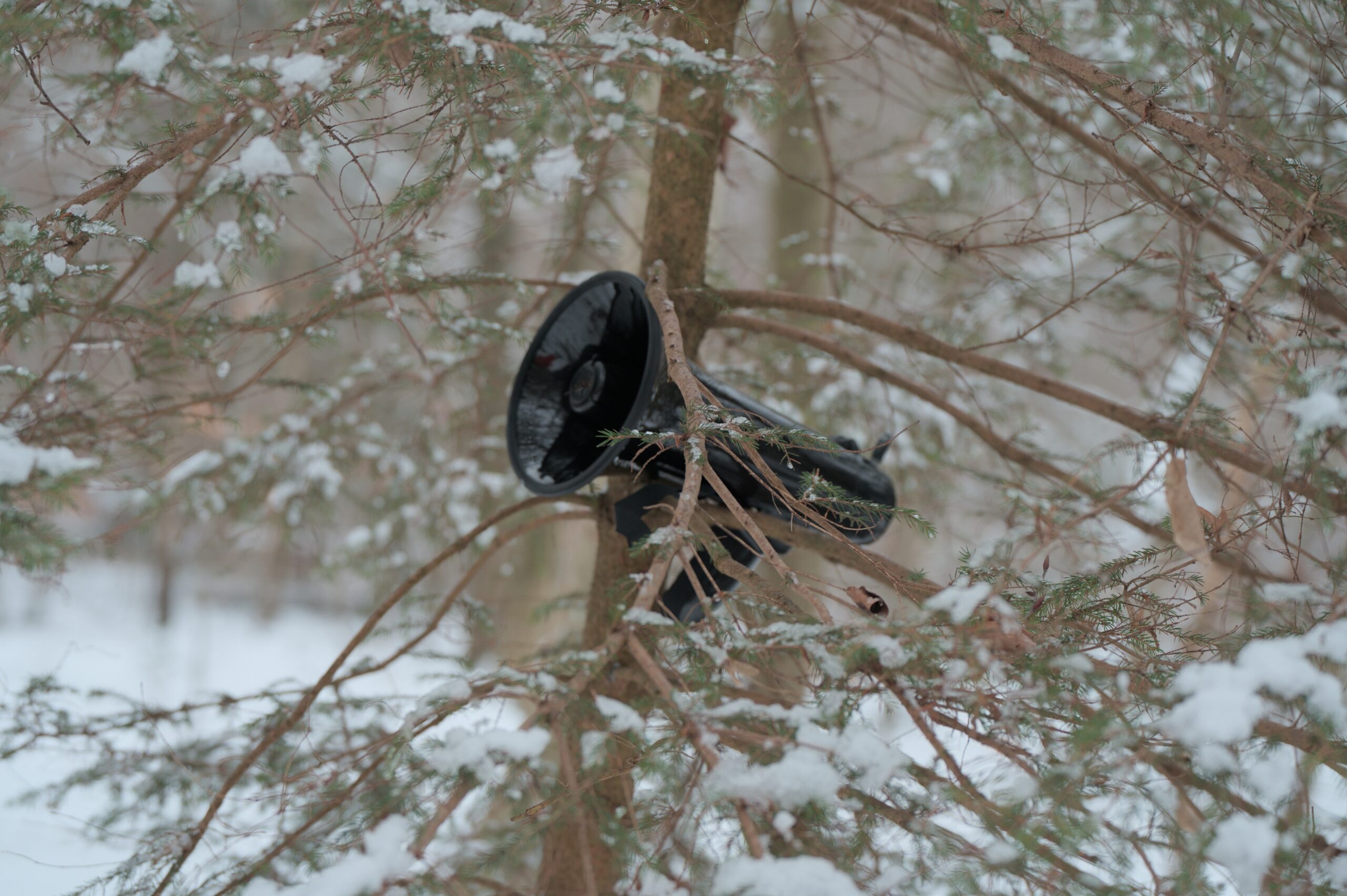
This work takes shape through both theoretical reflection and artistic practice, resulting in an event/installation staged in a forest at night, where sound is transmitted via megaphones. This event is signified by the absence of speech, materialized through the physical and sonic properties of presence.

Silence is a political action in the context of the Serbian protests. In situations of heavy censorship, the refusal to speak or use words becomes a symbolic gesture that exposes the contours of suppressed language, performing refusal and articulating absence. This practice is theoretically shaped through dialogue between sound studies, political theory, and new materialist thought, drawing on the work of Salomé Voegelin, Brandon LaBelle, Christoph Cox, Thomas Gould and Pwyll ap Stifin.


The artistic component of this research happens in the forest at night to explore the potential of recontextualizing silent protest by changing its location and environment. Here, the forest functions as a physical site and as a metaphor for multiplicity, where trees, animals, insects, and other non-human presences overlap their voices, rustles, and hums.

The etymological root of the Serbian word for forest—šuma, derived from šum, meaning hum, rustle, or noise—resonates with this playful, continuous collective sound atmosphere that stands in opposition to silence. However, this ambience is characterized by the absence of human intervening sound, primarily voice; yet this absence does not signal emptiness or stillness. Instead, it becomes a field of relations extending beyond human speech.
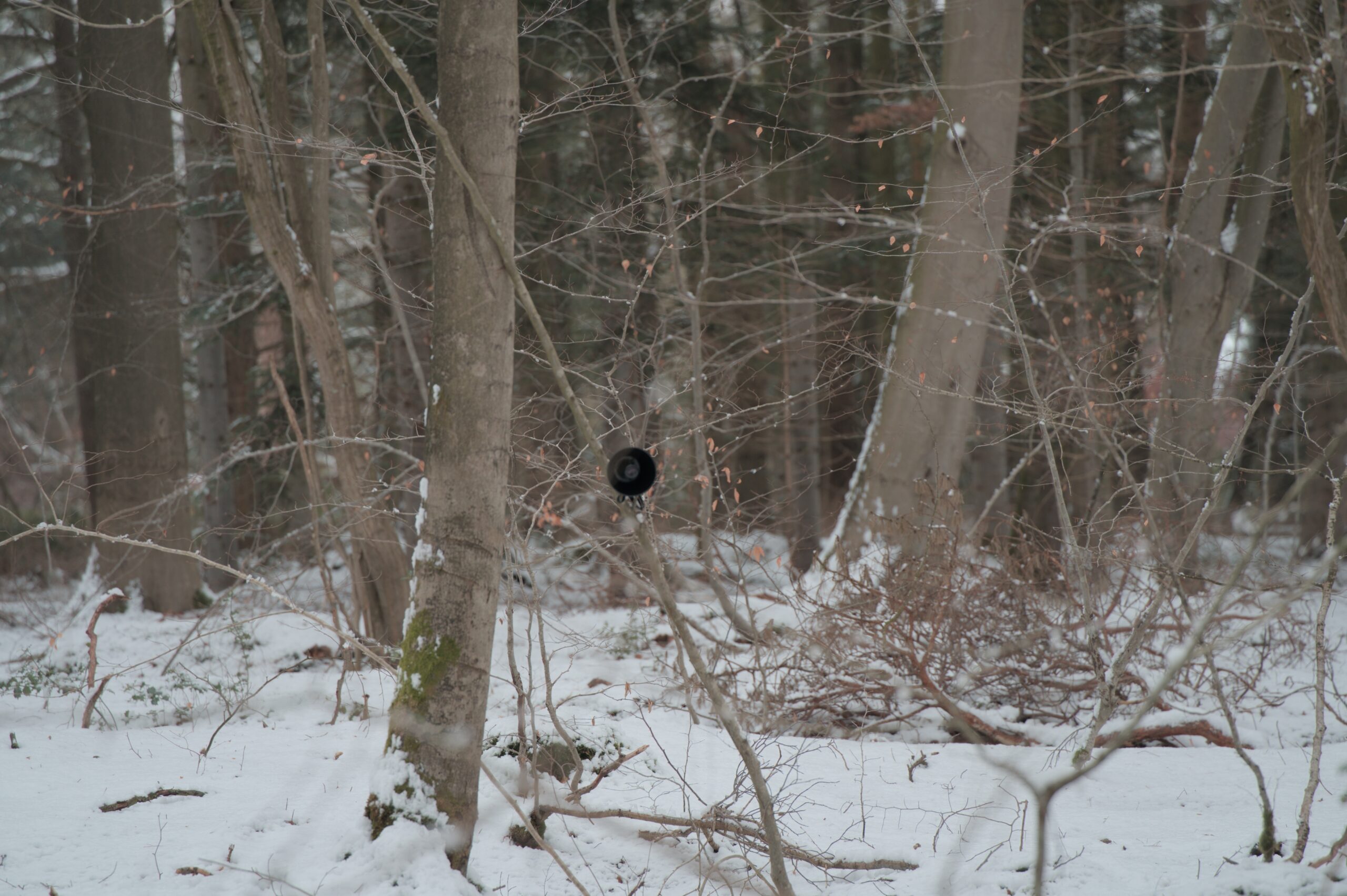
The work uses megaphones as a medium for sound transmission, intervening in the politics of amplification. Traditionally used to project speech, particularly during demonstrations, megaphones in this work are used to amplify its disappearance, playing field recordings of silent protest. The technology of protest is thus transformed into a medium of quiet transmission, reversing its original function and creating collective resonance within a new environment.
Photo 1,3,6,7 – Alethia Pinzón-Rodríguez
Photo 2,4,5 – Jimi Liu